
What Are Brands Actually Looking for From Creators in 2026?
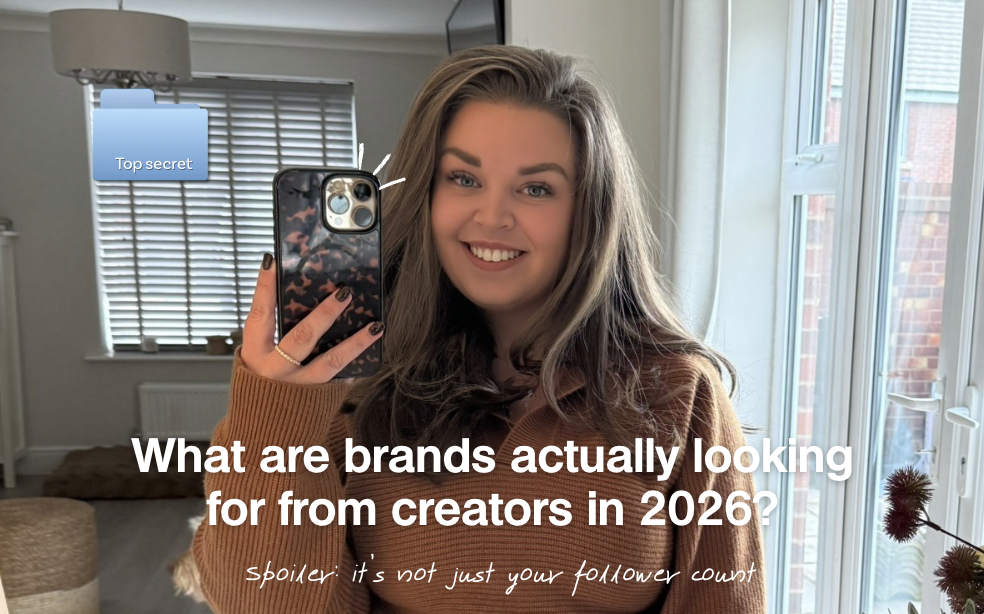
I’ve seen behind the curtain on £2m+ worth of brand collaborations, and if there’s one thing I’d want creators to know, it’s this: follower count is nowhere near the whole story.
As an agency founder, I’m in conversations with brands and creators every single day. I see what brands ask for, what makes them excited to work with someone, what makes them come back for a second campaign and, just as importantly, what can make them say no.
And I speak to so many creators who are stuck wondering the same thing:
“My content is good. I have an engaged audience. So why aren’t I getting more brand deals?”
If that sounds familiar, you might be focusing on the wrong thing.
The creator economy has become much more commercially sophisticated. Brands aren’t simply looking for the biggest audience they can find. They’re looking for creators who can create attention, build trust, drive action and deliver results.
So, what does that actually look like?
1. A relevant audience, not just a big one
For a long time, follower count was treated as one of the most important indicators of a creator’s value.
It still has a place, but it’s certainly not the whole picture.
A creator with 20,000 highly engaged followers who genuinely trust their recommendations can be far more valuable to a brand than someone with 200,000 followers who rarely interacts with their audience.
Brands want to know who your audience is and whether they are actually relevant to what they’re trying to sell.
If you’re a fashion creator with an audience that regularly asks where your outfits are from, that’s valuable. If you’re a travel creator whose audience actively uses your recommendations to book hotels and trips, that’s valuable.
Your audience doesn’t just need to be big.
It needs to make sense for the brand.
What you can do:
Get really clear on your audience. Look beyond your follower number and understand who is actually watching, engaging and taking action because of your content.
That information should become part of how you position yourself to brands.
2. Can you move people from A to B?
This is one of the biggest things I’d be thinking about if I were trying to become more commercially attractive to brands.
Can your content actually drive action?
It could be a link click, a website visit, an affiliate sale, a discount code being used, a product being purchased or simply getting someone to search for the brand after seeing your content.
Brands want creators who can do more than generate views.
They want to know that you can take someone from:
“I’ve seen it” → “I’m interested” → “I’m taking action.”
And you don't need to have millions of followers to demonstrate that.
What you can do:
Start paying attention to the actions your audience takes after seeing your content. Look at clicks, saves, shares, comments, affiliate performance and any other useful indicators.
Then start collecting that information.
Your results are part of your sales pitch.
3. Can you actually sell?
This one might sound obvious, but being able to sell something without making your audience feel like they’re being sold to is a genuine skill.
The best commercial creators can take a product and make it feel completely natural within their content. They understand how to communicate the benefit, tell the story and make their audience think, “I actually want that.”
That’s incredibly valuable to a brand.
You’re not just creating an advert. You’re using your understanding of your audience to communicate why that product matters to them.
What you can do:
Look at your existing content and ask yourself: “If I were a brand, could I see how this creator could sell my product?”
If the answer is no, think about how you could make your content more intentional.
4. Are you someone the brand wants to work with again?
This is something that doesn’t get talked about enough.
A brand collaboration isn’t just about what happens on your feed.
Your communication throughout the process matters. So does being organised, meeting deadlines, taking feedback well and making the entire process easy for the brand.
From the brand’s perspective, a creator who delivers great content and is brilliant to work with is much more likely to become a repeat booking.
And repeat bookings are where creator businesses can become much more sustainable.
What you can do:
Treat every collaboration as though it could lead to the next one.
Be proactive with communication, deliver when you say you will and follow up after the campaign. If the content performed well, share the results with the brand.
Don’t just complete the campaign.
Build the relationship.
5. Can you create content that works commercially?
Brands are increasingly thinking beyond a creator’s audience.
They’re also thinking about the content itself.
Can they use it on their own social channels? Could they put paid spend behind it? Could it work on their website, in an email campaign or across different parts of their marketing?
This means your value isn't only in the number of people who follow you.
Your ability to create effective, usable content has its own value.
This is particularly important for creators who might not have a huge audience but have a really strong content skillset.
What you can do:
Start thinking about your content as more than something that lives on your own profile.
Create content that demonstrates strong hooks, storytelling, product integration and clear calls to action.
Show brands what they could do with your content beyond your own audience.
6. Do you actually understand the brand?
If I could give creators one piece of advice before they pitch a brand, it would be this:
Do your research.
The generic “I love your brand and would love to collaborate” pitch isn't going to tell a brand why they should choose you.
The creators who stand out understand the brand, its audience, its positioning and what it is trying to achieve — and then show where they fit into that.
When a creator comes to us with a genuinely thoughtful idea that clearly makes sense for the brand, it immediately changes the conversation.
It demonstrates that they aren't just looking for any collaboration.
They've identified an actual opportunity.
What you can do:
Before pitching, spend some time looking at the brand’s current content, campaigns, audience and competitors.
Then ask yourself:
“What could I create for them that they aren't already doing?”
That answer could be the foundation of your pitch.
So, what are brands actually looking for in 2026?
It’s not simply the biggest audience.
It’s creators who can capture attention, build trust, drive action and deliver results.
And they want creators who are commercially aware, understand their own value and make the entire collaboration process easy.
If you’re currently thinking, “But I have good content and an engaged audience — why aren't I getting the opportunities I want?”, take a step back and look at your account from a brand’s perspective.
Can you clearly demonstrate:
Who your audience is
What makes you different
What action your content drives
What results you can deliver
Why a brand should want to work with you
And why they should want to work with you again
Because that’s the shift from being a creator with an audience to becoming a creator with commercial value.
And if you’re ready to build that commercial strategy around your own account, that’s exactly what we help creators do inside Influence to Income™.
Ready to understand how you could turn your influence into income?
Find out more about Influence to Income™
Or, if you want to talk through your account, your goals and where you could be monetising more, book a discovery call with us.
Your follower count is only one part of the story. The real question is: how much commercial value can you create?