
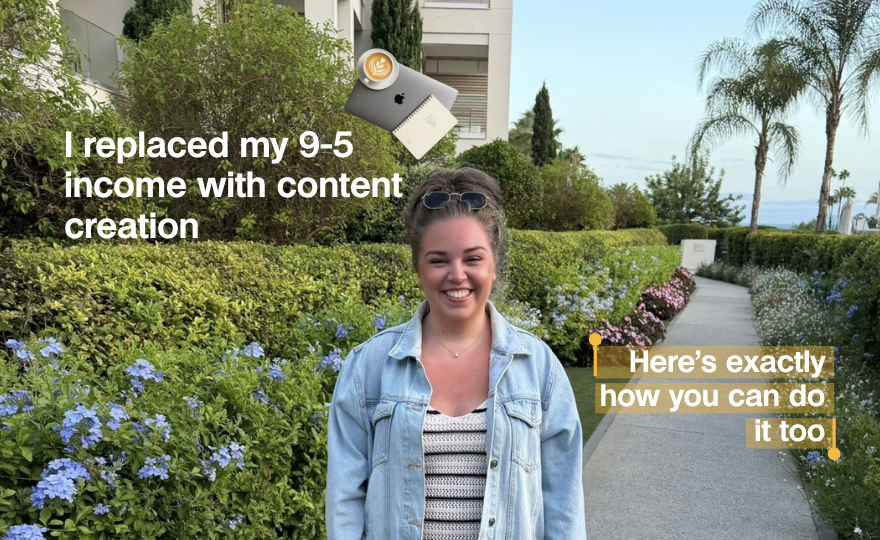
You know you want to make content creation your full-time career, but you’re not quite sure how to make it work?
I remember being in exactly that position. Creating content was something I genuinely loved doing and felt passionate about, and I knew it was what I wanted to spend my time on. The difficult part was figuring out how to turn something I loved into an income I could actually rely on.
The truth is, it didn’t happen overnight. It wasn’t the result of one viral video, and it certainly wasn’t because I had millions of followers. What changed everything was when I stopped treating content creation like a hobby and started treating it like a business. I had to think beyond simply creating content and start thinking about how that content could attract opportunities, generate different income streams and ultimately support me as a career.
These are the things that made the biggest difference for me, and the same foundations I now help other creators build.
1. I got clear on my positioning
When I first started creating content, I was creating because I enjoyed it. Over time, I realised that if I wanted to build a sustainable career from it, I needed to become more intentional about what I was putting out into the world.
I started thinking about what I wanted to be known for, the values I wanted my content to represent and the types of brands I genuinely wanted to work with. This didn’t mean putting myself into a tiny niche or only ever talking about one subject. It meant having enough clarity that people could understand who I was, what I offered and why they should follow me.
That clarity also made creating content much easier. Instead of constantly wondering what I should post, I had a much better understanding of the type of content that would attract the right audience and, ultimately, the right opportunities.
2. I started creating content for the brands I wanted to work with
One of the biggest mindset shifts for me was realising that I didn’t have to wait for brands to tell me what they wanted.
I started identifying the brands I wanted to work with and then thinking about how I could naturally demonstrate what I could create for them. If I loved a brand’s products or aesthetic, I would create content that felt authentic to me but also showed the brand exactly how I could bring their product to life.
My content became part of my pitch.
Rather than simply telling a brand that I was capable of creating great content, I could point them towards examples that already demonstrated it. This is something I still encourage creators to think about today. Your profile can act as a portfolio, so make sure it reflects the type of work and partnerships you want to attract.
3. I actively pitched
I also learnt very quickly that I couldn’t sit around waiting for my dream brands to find me. I had to create opportunities for myself, which meant getting comfortable with pitching.
It can feel daunting putting yourself out there and potentially hearing “no”, but the reality is that not every opportunity is going to land in your inbox. Sometimes you have to make the first move, explain what you can offer and show a brand why working with you makes sense.
I pitched, followed up and kept going. In fact, around 80% of the work we now bring into our agency comes from pitching, which shows just how powerful being proactive can be. You don’t always have to wait for the opportunity to appear; sometimes you can create it yourself.
4. I stopped accepting the first number
As more opportunities started coming in, I realised that getting the opportunity was only one part of building a successful creator business. I also needed to understand how to value my work properly and negotiate.
I learnt to look beyond the initial fee and understand exactly what was being asked of me. What content was involved? How long would the brand be able to use it? Was there exclusivity? Were there additional deliverables? Did the budget actually reflect the amount of work involved?
I became much more comfortable asking for more when the initial offer didn’t reflect the value of the work. It might not feel like a huge difference in the moment, but those small increases can add up significantly over the course of your career.
5. I diversified my income
Brand partnerships were a big part of my income, but I never wanted my entire career to depend on whether a brand said yes to a campaign. I wanted to build something that could continue generating income from the content and audience I had already created.
That meant looking at additional revenue streams, including affiliate income, and being more strategic about the content I created. I started thinking about how one piece of content could have a longer lifespan and generate value beyond a single paid collaboration.
That mindset is important because your audience and your content are assets. You don’t have to rely on one income stream when there are different ways to build revenue around what you already do.
6. I learnt the commercial side of being a creator
The commercial side of being a creator probably isn’t the part that gets people excited when they first start creating content, but it is one of the most important things to understand if you want to turn it into a career.
I had to learn about contracts, usage rights, exclusivity and payment terms, as well as what I should be looking out for when agreeing to a partnership. Understanding those things gave me much more confidence when working with brands and helped me protect myself commercially.
It’s also one of the reasons we now have an in-house legal team supporting our creators at OAC. Being a successful creator isn’t just about making brilliant content; it’s about understanding the business behind it and making sure you’re protecting the income you work hard to generate.
Eventually, my content became my career
What started as wanting to make money from my own content eventually allowed me to replace my 9–5. But that wasn’t actually the end of the journey. It led me to where I am now, building a business that helps other creators do the same.
I know how exciting it feels to love creating content but also feel frustrated because you don’t know how to turn that passion into something financially sustainable. There’s a huge difference between having an audience and knowing how to build a business around that audience, and that’s the gap I wanted to help creators close.
That’s why we created Influence to Income™.
The programme takes the foundations that helped me build my own creator career… positioning, content strategy, brand partnerships, pitching and negotiation, affiliate income and the commercial side of being a creator and helps you apply them to your own business.
You don’t need to wait for one viral video or reach a certain follower count before you can start taking your content seriously. You can start building the foundations now and create a strategy around turning the thing you already love into an income you can rely on.
Ready to turn your content into a career?
Find out more about Influence to Income™ or book your free discovery call and let’s talk about where you are now and what your next step could look like.